Showing posts with label pie crust. Show all posts
26 October 2015
Snickerdoodle Pie
Snickerdoodles. I have posted about them here on latent chestnut and on Family Tree-Eats. They are one of my favorite cookies, and Emilie's personal favorite. The other day, Em and I were making fresh pasta, and she kept talking about wanting to make a pie with the pasta dough. I told her that the dough was completely different and that we would make a pie another time. Though, I must say that the rolled pasta sheets do look similar to pie crust.
She wouldn't let it go and kept talking about making a pie. I kept telling her we would do it another day. Out of the blue, she said, "Can we make a snickerdoodle pie?" That question perked my ears up in a hurry. I had never heard of a snickerdoodle pie, and this sounded like to perfect time to dream one up. We had a few errands to run, so she sat in the backseat with a pen and paper and I started listing off some ingredients for her to write down. Before we knew it, we had the makings of a snickerdoodle pie.
As soon as we got home, we made a pie crust and put it in the refrigerator to cool before rolling it out. Then we got to work on making the filling. I must have channeled my grandma's buttermilk pie recipe when Emilie and I were thinking of ingredients, because these pies are very similar. Perhaps because I thought buttermilk would be the perfect component to a snickerdoodle inspired pie, because of it's tang. But what gives snickerdoodles that bit of tang, I wondered?
When I think of snickerdoodles, I think of a cookie that is soft and chewy on the inside, delightfully crispy on the edges. I think of the warm spiciness of the cinnamon and the use of cream of tartar in the recipe. Dare I add cream of tartar to the pie? What does it even do? Does it even have it's own flavor? I needed answers!
I went straight to the source and popped open my jar of cream of tartar and tasted it all by itself. It was quite tangy and acidic. Which makes sense because my snickerdoodles have a bit of tang that is balanced out by the sugar and cinnamon. Cream of tartar also acts as a stabilizer, so I thought that it couldn't hurt to add some to our new pie creation. I think it is just as much a part of snickerdoodles as the cinnamon and sugar coating.
The pie filling came together like nothing, especially since Emilie did it all by herself while I was rolling out the pie crust. I just gave it a final whisking at the end to make sure all the ingredients were thoroughly integrated. To replicate the cinnamon sugar coating on the traditional cookie, we mixed some cinnamon and sugar together and rubbed it in to the empty pie shell. Then, with about 20 left in the cooking process, we dusted the top of the pie with more cinnamon and sugar.
The pie had the look of a snickerdoodle, but it was now time for the moment of truth...tasting and judgment! Upon removing the first slice of pie, I breathed a sigh of relief because the filling had set up beautifully. It was nice and creamy, and just looked delicious. After taking the first bite, my eyes lit up and I knew we had something special.
This pie is creamy, tangy, sweet and cinnamon-ny. The pie crust and the cinnamon and sugar topping add a nice texture, that is ever so reminiscent of a snickerdoodle. The tang from the buttermilk and cream of tartar are balanced by the sugar to create a truly unique pie. This one is a keeper!
Just out of curiosity, I did an internet search for snickerdoodle pie and found the options very limited. So, not only is this pie incredibly satisfying and delicious, I think it is pretty unique, too. To think, it probably wouldn't have happened if Emilie didn't want to make a pie with pasta dough...
Snickerdoodle Pie
Ingredients
2 eggs
1 1/4 cups sugar
1/2 stick melted butter
1/4 cup flour
1/2 teaspoon cream of tartar
1 cup buttermilk
1 9 inch pie crust (preferably homemade)
1 teaspoons ground cinnamon
3 tablespoons sugar
Directions
Preheat oven to 450 degrees F.
In a large bowl, whisk together the eggs, 1 1/4 cups of sugar, melted butter, flour, cream of tartar, and buttermilk until thoroughly combined.
In a small bowl or cup, mix together the cinnamon and 3 tablespoons of sugar.
Take half of the cinnamon sugar mixture and rub onto the top of the empty pie crust. Then, pour the filling into the pie crust and bake at 450 degrees for 10 minutes. Reduce the oven temperature to 300 degrees and bake for another 10 minutes.
Then, pull out the oven rack or take the pie out of the oven and top with the remaining cinnamon and sugar mixture. Return the pie to the 300 degree oven and continue to bake for 20 to 25 minutes or until the filling barely jiggles when moved. Cool completely before serving.
file under:
ari/em,
buttermilk pie,
cinnamon,
cream of tartar,
emilie,
family tree-eats,
in the kitchen,
original recipe,
pie,
pie crust,
recipe,
snickerdoodle,
snickerdoodle pie
04 August 2011
Strawberry Cream Pie
When I was young, I loved the strawberry cream pie from Moore's Pie Shop. In fact, I even had one for my birthday one year instead of a cake. The strawberries have been wonderful this year, so I decided to try my hand at making a strawberry cream pie of my own.
The components of the pie seemed simple enough; pie crust, cream filling, and strawberries. So, first I made and blind baked a pie crust, then I made a batch of AB's pastry cream, then halved and macerated some strawberries. I let the pastry cream cool and strawberries macerate overnight in the refrigerator, and the next day I was ready to assemble my pie.
The strawberries released a lot of their juices overnight, so I put the juice in a small saucepan and let it reduce to a syrupy consistency. I then poured the strawberry syrup over the strawberries to act as a glaze. Yum! I spread the pastry cream on the pie crust, then placed the strawberries on top of the cream, and my pie was complete.
The strawberry cream pie was simply delicious. The strawberries and cream go together so well, and the tender, flaky crust is the perfect vehicle to bring it all together. It's a cool, sweet flavor wonderland. A perfect summer treat!
file under:
alton brown,
in the kitchen,
macerated strawberries,
pastry cream,
pie,
pie crust,
strawberry,
strawberry cream pie
06 October 2010
What to do with that leftover pie crust
With every pie crust, there is inevitably some excess dough left over after trimming the edges around the pie plate. Now, this stuff is simply too good to just throw it away, so why not make an extra little treat with it. When I was young, I remember Nonna rolling out the leftover pie crust dough, sprinkling it with cinnamon and sugar, and baking it. Talk about delicious! I have adopted this method for my leftover crust, too.
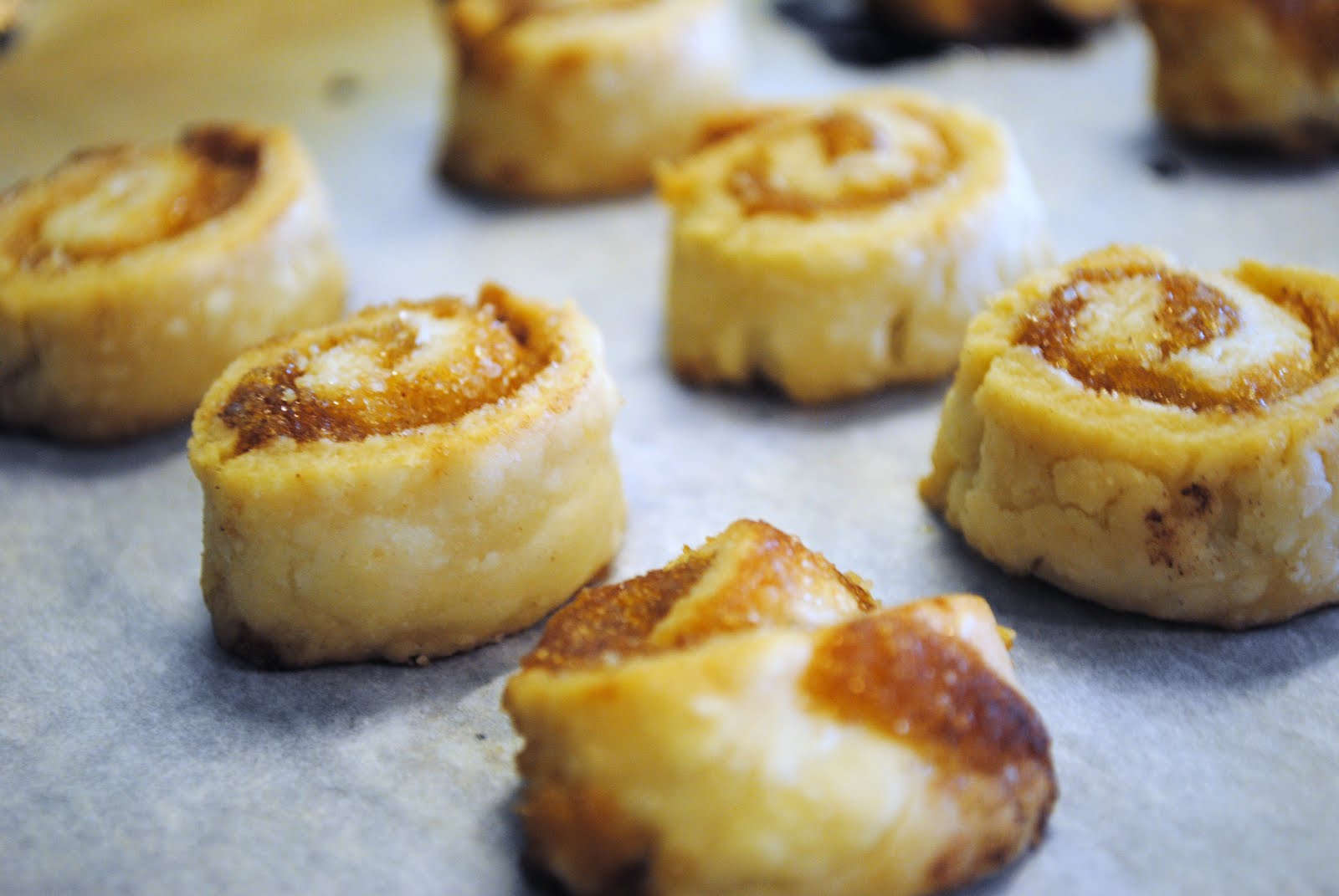
With my last pie, I decided to try something new with my leftover crust dough. Instead of baking it flat, I rolled the dough after sprinkling it with cinnamon and sugar. I then cut the rolled dough into half inch rounds so they resembled little cinnamon rolls and baked them on some parchment paper. It worked like a charm. They pretty much tasted the same as the flat crust, but it was so fun to eat those miniature cinnamon rolls.
file under:
in the kitchen,
leftover pie crust,
nonna,
pie crust
03 October 2010
Pie crust (a tutorial)
It is my opinion that pie crust is just as important as the filling; and if true pie bliss is to be achieved, one must make his or her own crust. It's a simple thing, really, just flour, salt, fat and water. Yum! Knowing how to put it all together is the tricky part, but a little practice and know how can go a long way.
I have been making my own pie crust since Nonna gave me her apple pie recipe. My first attempts at making it were a bit shaky, and I remember being very frustrated at times. My lowest point was when I was making a pie and the pie dough kept falling apart; I angrily wadded the dough into a ball and started kneading it. The dough came together quite nicely and the crust looked perfect on the pie, but the crust was tough. So tough, that people didn't hesitate to tell me, my own family no less. I was devastated, but determined to learn the art of the pie crust, and never let mine be tough again.
It wasn't until I watched the Good Eats episode "I Pie", that I truly understood why I was doing what I was doing when I made pie crust. I finally learned how to achieve the perfect balance between tender and flaky, and my pie crust became consistently good. I love making my own pie crust because it really does take homemade pie to another level of goodness. Whenever I take a pie to a gathering, someone inevitably comes up to me and says, "I love your pie crust, and I don't even like pie crust." That's enough motivation for me to keep making my own.
I use Alton Brown's recipe for my pie crust. I use the same ingredients he calls for, though my technique varies from his slightly. The ingredients are quite simple:
1/4 cup unsalted butter (cut into cubes)
1 ounce lard (more on that later...don't be scared)
6 ounces all-purpose flour
1/2 teaspoon salt
Ice water
I know some people may be a bit squeamish when it comes to lard, so I'll let AB explain:
Now that we got that out of the way, let's discuss assembly.
I have been making my own pie crust since Nonna gave me her apple pie recipe. My first attempts at making it were a bit shaky, and I remember being very frustrated at times. My lowest point was when I was making a pie and the pie dough kept falling apart; I angrily wadded the dough into a ball and started kneading it. The dough came together quite nicely and the crust looked perfect on the pie, but the crust was tough. So tough, that people didn't hesitate to tell me, my own family no less. I was devastated, but determined to learn the art of the pie crust, and never let mine be tough again.
It wasn't until I watched the Good Eats episode "I Pie", that I truly understood why I was doing what I was doing when I made pie crust. I finally learned how to achieve the perfect balance between tender and flaky, and my pie crust became consistently good. I love making my own pie crust because it really does take homemade pie to another level of goodness. Whenever I take a pie to a gathering, someone inevitably comes up to me and says, "I love your pie crust, and I don't even like pie crust." That's enough motivation for me to keep making my own.
I use Alton Brown's recipe for my pie crust. I use the same ingredients he calls for, though my technique varies from his slightly. The ingredients are quite simple:
1/4 cup unsalted butter (cut into cubes)
1 ounce lard (more on that later...don't be scared)
6 ounces all-purpose flour
1/2 teaspoon salt
Ice water
I know some people may be a bit squeamish when it comes to lard, so I'll let AB explain:
Nothing affects the nature of the crust more than the fat that goes into it. Butter has a very low melting point, so it doesn't make a very flaky crust, and it also contains some water, which can definitely throw off your formula. At the same time, nothing browns or tastes better. So I'm definitely going to use some of this. But I'm also going to use lard. Rendered pig fat has a very high melting point, and a really coarse, crystalline structure, which means that it is ideal for making flaky crusts. And you'll be surprised to know that lard is even lower in cholesterol and saturated fat than butter is.
Now that we got that out of the way, let's discuss assembly.
I have grown accustomed to making my pie crust in a food processor, so that is how I will present it; though it is by no means necessary to the assembly. Also, the pictured ingredients are for two pie crusts, since I was making an apple pie.
Begin by placing the flour and salt in the food processor bowl and pulse a couple times. Add the butter and pulse 5 or 6 times; then, add the lard and pulse another 3 or 4 times until the mixture looks mealy. The goal is to have very small pieces of butter and somewhat larger pieces of lard.
Next, comes the water. I like to drizzle the water through the top of my food processor while pulsing. Do this until the dough holds its shape when squeezed together, while using as little water as possible. I sometimes add a dash of white vinegar to the water before I add it because the vinegar prevents the gluten strands from getting too long. It's sort of an insurance policy and the vinegar cannot be detected in the finished product.
(I may have added a bit too much water here, but the crust turned out fine)
Once the dough reaches the right consistency, dump it out on a piece of plastic wrap and squeeze together until it forms a ball; then press into a disk shape. Place the dough disk in the refrigerator for about 30 minutes. The point of this step is to allow for the flour to hydrate. Hydrated flour makes it easier to roll out the dough, so please don't skip this step.
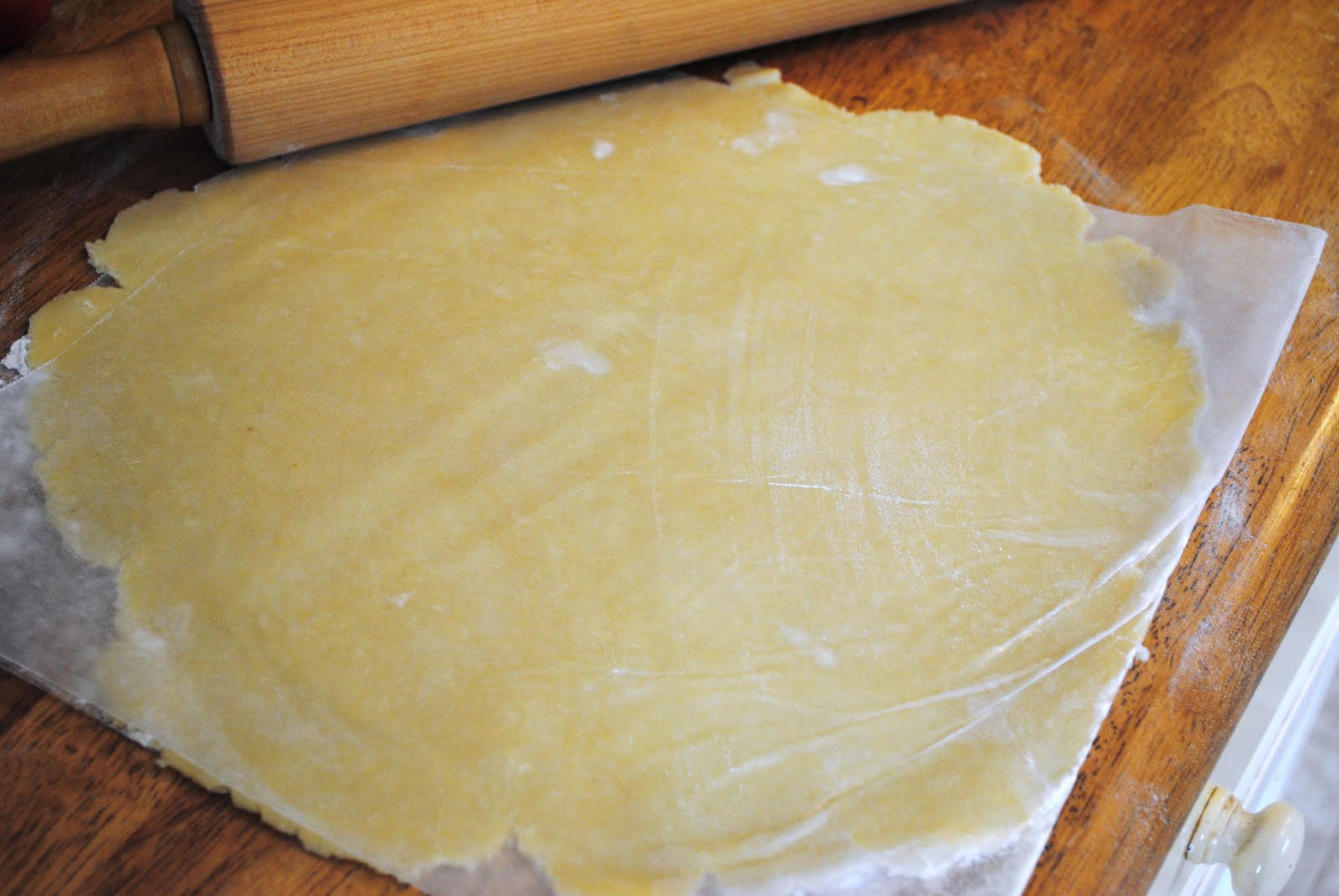
Now, place the dough on a floured piece of wax paper. The wax paper should be long enough to be folded into a square.
Lightly flour the top of the dough disk, and fold the wax paper over the top of it. Then, roll out the dough until it is about 10 to 12 inches in diameter.
Once the dough is ready, remove the wax paper from the top of the dough and slide your hand underneath the bottom. Flip the pie crust into an awaiting pie plate.
Now, remove the wax paper from the rest of the crust, and your mission is complete.
The pie crust is ready for filling. Since this is just a tutorial on pie crust, you'll have to just imagine what the finished pie looked like. But if you need a little help, look here. Don't be afraid to make your own pie crust, it is definitely worth it. Happy baking!
file under:
alton brown,
apple pie,
good eats,
i pie,
in the kitchen,
nonna,
pie crust,
pie crust tutorial
Subscribe to:
Posts (Atom)