


I have been making my own pie crust since Nonna gave me her apple pie recipe. My first attempts at making it were a bit shaky, and I remember being very frustrated at times. My lowest point was when I was making a pie and the pie dough kept falling apart; I angrily wadded the dough into a ball and started kneading it. The dough came together quite nicely and the crust looked perfect on the pie, but the crust was tough. So tough, that people didn't hesitate to tell me, my own family no less. I was devastated, but determined to learn the art of the pie crust, and never let mine be tough again.
It wasn't until I watched the Good Eats episode "I Pie", that I truly understood why I was doing what I was doing when I made pie crust. I finally learned how to achieve the perfect balance between tender and flaky, and my pie crust became consistently good. I love making my own pie crust because it really does take homemade pie to another level of goodness. Whenever I take a pie to a gathering, someone inevitably comes up to me and says, "I love your pie crust, and I don't even like pie crust." That's enough motivation for me to keep making my own.
I use Alton Brown's recipe for my pie crust. I use the same ingredients he calls for, though my technique varies from his slightly. The ingredients are quite simple:
1/4 cup unsalted butter (cut into cubes)
1 ounce lard (more on that later...don't be scared)
6 ounces all-purpose flour
1/2 teaspoon salt
Ice water
I know some people may be a bit squeamish when it comes to lard, so I'll let AB explain:
Nothing affects the nature of the crust more than the fat that goes into it. Butter has a very low melting point, so it doesn't make a very flaky crust, and it also contains some water, which can definitely throw off your formula. At the same time, nothing browns or tastes better. So I'm definitely going to use some of this. But I'm also going to use lard. Rendered pig fat has a very high melting point, and a really coarse, crystalline structure, which means that it is ideal for making flaky crusts. And you'll be surprised to know that lard is even lower in cholesterol and saturated fat than butter is.
Now that we got that out of the way, let's discuss assembly.

I have grown accustomed to making my pie crust in a food processor, so that is how I will present it; though it is by no means necessary to the assembly. Also, the pictured ingredients are for two pie crusts, since I was making an apple pie.
Begin by placing the flour and salt in the food processor bowl and pulse a couple times. Add the butter and pulse 5 or 6 times; then, add the lard and pulse another 3 or 4 times until the mixture looks mealy. The goal is to have very small pieces of butter and somewhat larger pieces of lard.

Next, comes the water. I like to drizzle the water through the top of my food processor while pulsing. Do this until the dough holds its shape when squeezed together, while using as little water as possible. I sometimes add a dash of white vinegar to the water before I add it because the vinegar prevents the gluten strands from getting too long. It's sort of an insurance policy and the vinegar cannot be detected in the finished product.

(I may have added a bit too much water here, but the crust turned out fine)
Once the dough reaches the right consistency, dump it out on a piece of plastic wrap and squeeze together until it forms a ball; then press into a disk shape. Place the dough disk in the refrigerator for about 30 minutes. The point of this step is to allow for the flour to hydrate. Hydrated flour makes it easier to roll out the dough, so please don't skip this step.

Now, place the dough on a floured piece of wax paper. The wax paper should be long enough to be folded into a square.

Lightly flour the top of the dough disk, and fold the wax paper over the top of it. Then, roll out the dough until it is about 10 to 12 inches in diameter.
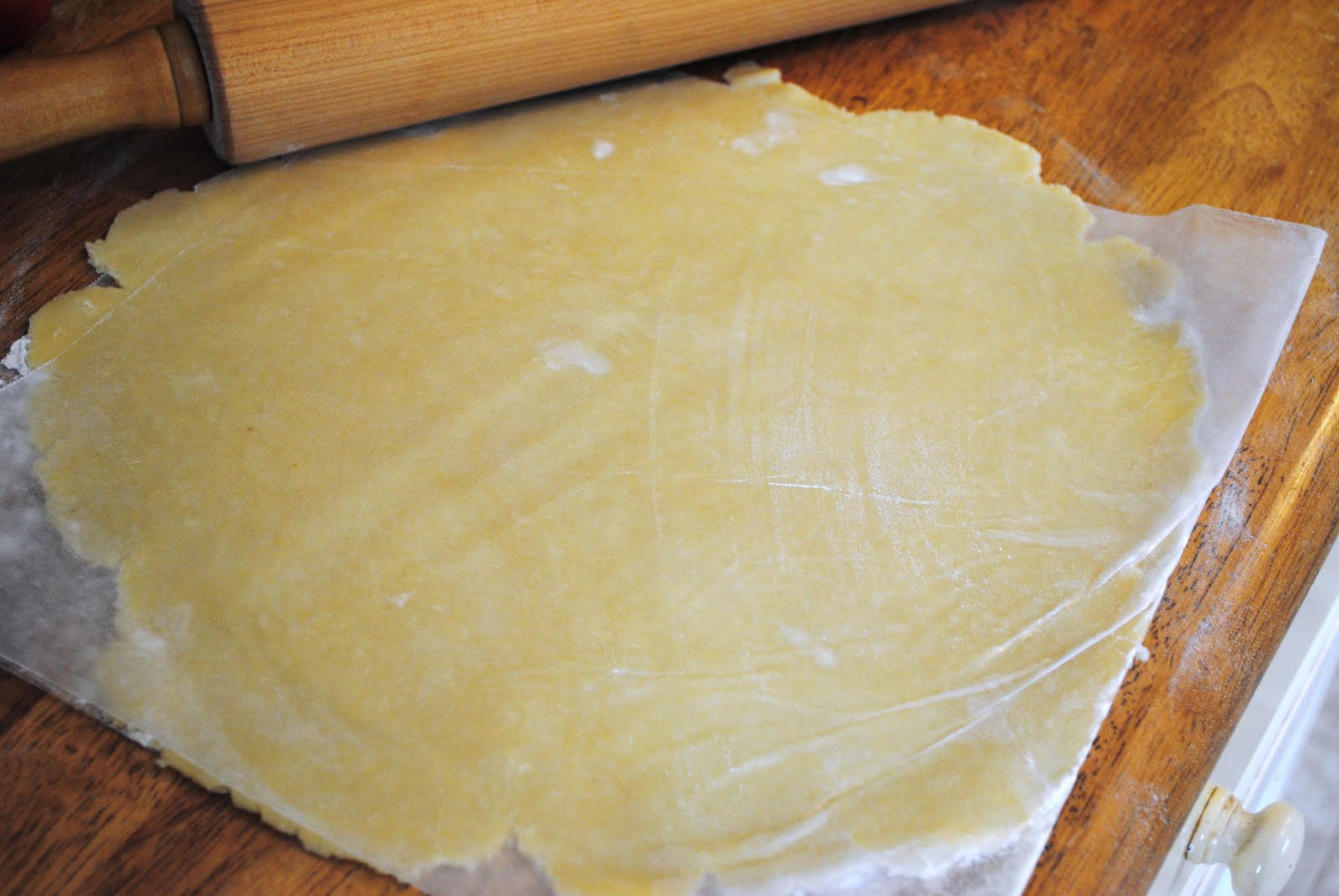
Once the dough is ready, remove the wax paper from the top of the dough and slide your hand underneath the bottom. Flip the pie crust into an awaiting pie plate.

Now, remove the wax paper from the rest of the crust, and your mission is complete.

The pie crust is ready for filling. Since this is just a tutorial on pie crust, you'll have to just imagine what the finished pie looked like. But if you need a little help, look here. Don't be afraid to make your own pie crust, it is definitely worth it. Happy baking!


